
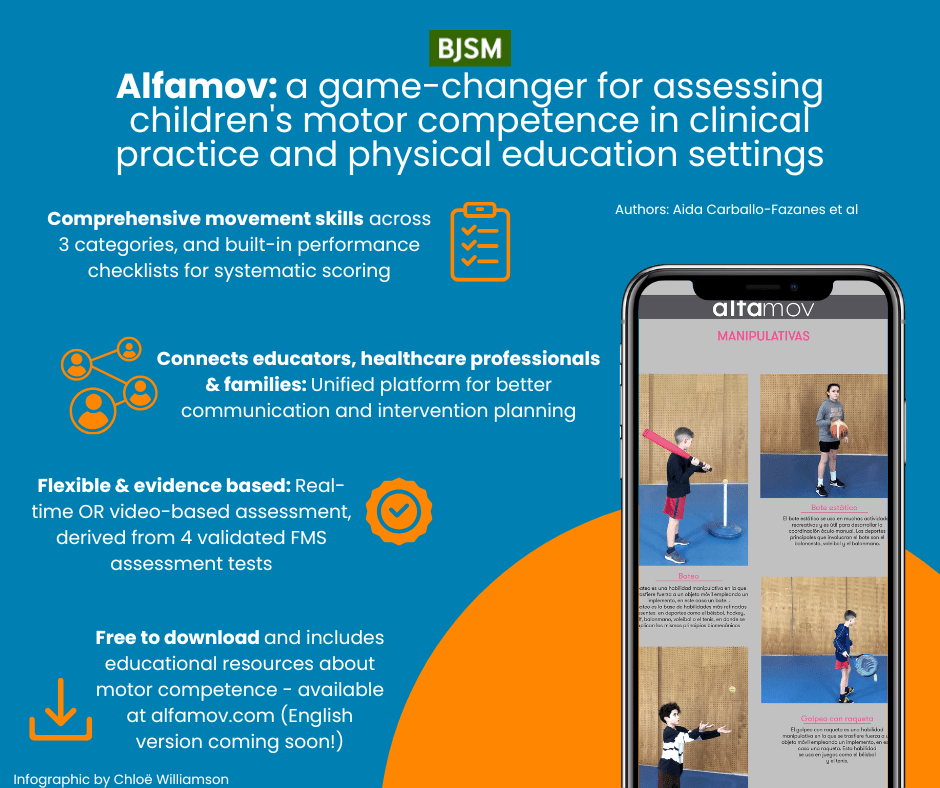
A new era has begun in the evaluation of children’s motor skills with the introduction of Alfamov, an innovative tool designed to transform how clinicians, therapists, and educators assess motor competence. Featured in the latest British Journal of Sports Medicine (BJSM) Blog, Alfamov bridges the gap between clinical precision and practical usability, offering a modern, evidence-based approach to understanding children’s physical development.
Why Alfamov Matters
Motor competence — the ability to execute and coordinate movement skills — is a key indicator of a child’s overall physical, cognitive, and social well-being. Traditional assessments often rely on subjective observation or cumbersome testing protocols that can be time-consuming and inconsistent across settings. Alfamov changes this landscape by providing a standardized, reliable, and engaging platform for evaluating movement performance in children aged 4–12 years.
How Alfamov Works
Alfamov uses motion analysis technology and validated task modules to measure essential movement patterns such as balance, coordination, object control, and locomotor skills. Its digital interface makes it user-friendly for both assessors and children, ensuring accurate data collection without sacrificing engagement. The tool generates detailed reports, helping professionals:
1. Identify developmental delays or motor impairments early
2. Design personalized intervention plans
3. Track progress over time with measurable outcomes
Applications in Clinical and Educational Settings
For clinicians, Alfamov enhances diagnostic precision in pediatric physiotherapy, occupational therapy, and developmental medicine. For physical educators, it offers a fun, structured way to monitor skill acquisition, guide lesson planning, and promote lifelong physical literacy.
A Step Forward in Child Health and Performance
By integrating technology with evidence-based assessment, Alfamov empowers professionals to make data-driven decisions that improve children’s health outcomes. Its introduction marks a significant leap toward bridging the gap between research and real-world practice.

 Hellotherapy