
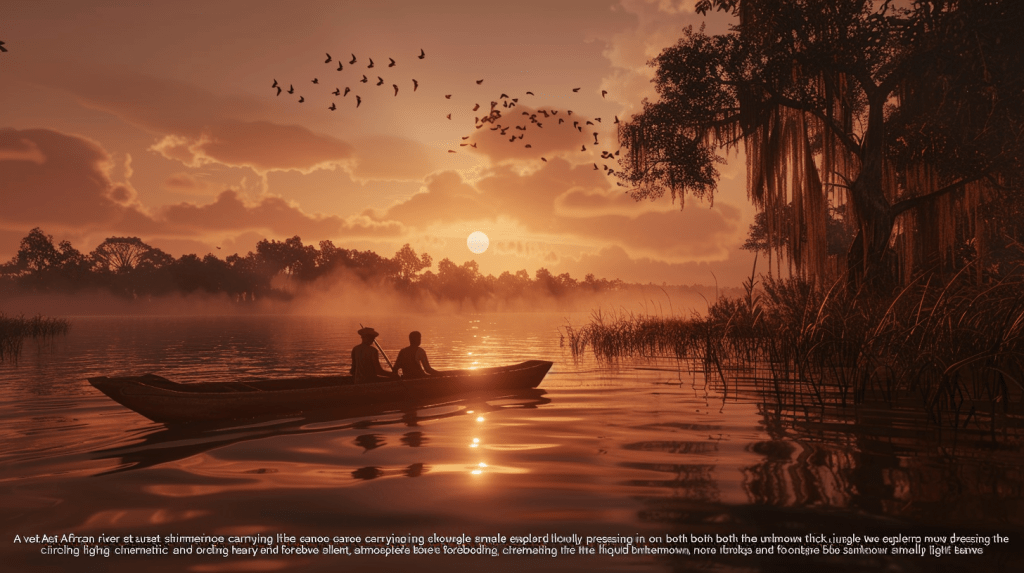
Book One: Blood of the River
Chapter Three — Capture & the Altar
The first spear struck the ground beside me like a bolt from God’s own hand.
The second brushed my sleeve. Then came the voices — guttural, layered, not screams but chants that rippled through the thick air.
John shouted my name, but his voice drowned beneath the drumming — slow, deliberate, ancient. Before I could run, they were upon us.
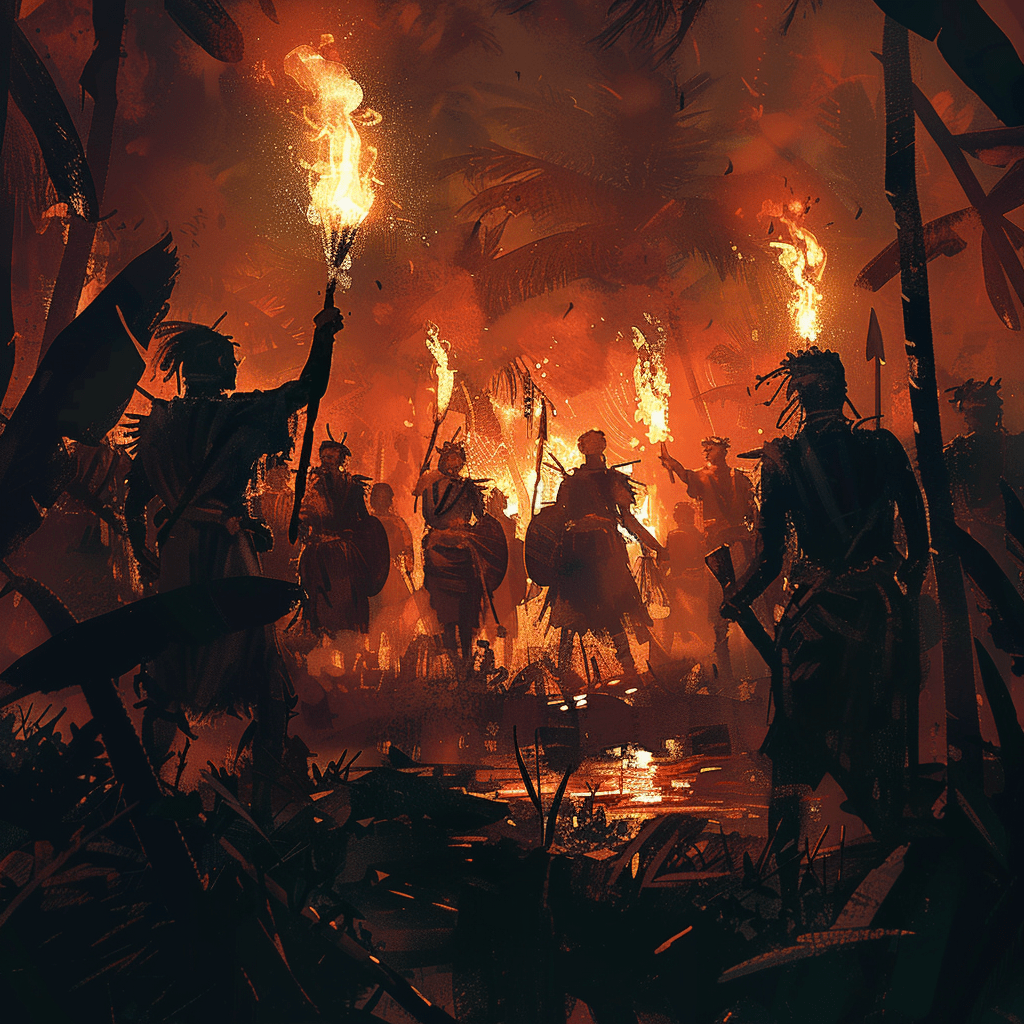
Hands, so many hands. Painted faces gleamed through the shadows — blackened foreheads streaked with ash and red dye. I felt the world tilt as a rope bit into my wrists, the fibers burning through my skin. Someone snatched our compass. Another tore at my coat buttons as though they were charms.
They dragged us through the heart of Aboh. The huts, once silent, now breathed with life, the doors creaked open, eyes glowed from every corner. Smoke spiraled from clay pots. Children peeked from behind carved masks taller than themselves.
I tried to speak, to plead, but each word was swallowed by the chant.
“Obia… Obia…” they murmured, or was it Obo? The word pulsed like a living thing, wrapping itself around my mind.
At the center of the square stood a structure that seemed to have grown from the earth itself: the altar.
It was neither stone nor wood — but something in between, dark as storm clouds, carved with faces twisted in anguish. Animal bones and feathers hung from its edge, whispering in the wind. And behind it — a mound of skulls bleached pale by the sun.
An elder, tall and thin as a reed, stepped forward. His eyes were white… not blind, but blinding. Around his neck hung a pendant shaped like the river’s curve. When he spoke, even the birds fell silent.
“These are the ones,” he said in a voice that trembled the air. “The pale sons sent by the water spirits.”
A murmur swept through the crowd. Fingers pointed at our skin.
“Al-bino… Al-bino…” they hissed, as though the word itself were sacred.
I tried to explain that we were explorers, not gods, not offerings but they only tightened the ropes. John struggled, cursing through clenched teeth until a spear butt silenced him.
Then I saw it — at the foot of the altar, a basin filled with something blacker than night. The smell struck me first — iron, rot, and salt. Blood. Human blood.
A woman wailed somewhere behind us. The sound tore through the chanting. I turned and she was kneeling, her hair loose, her eyes fixed on the altar. Her arms reached toward us as if she saw not two men, but ghosts of those she had lost.
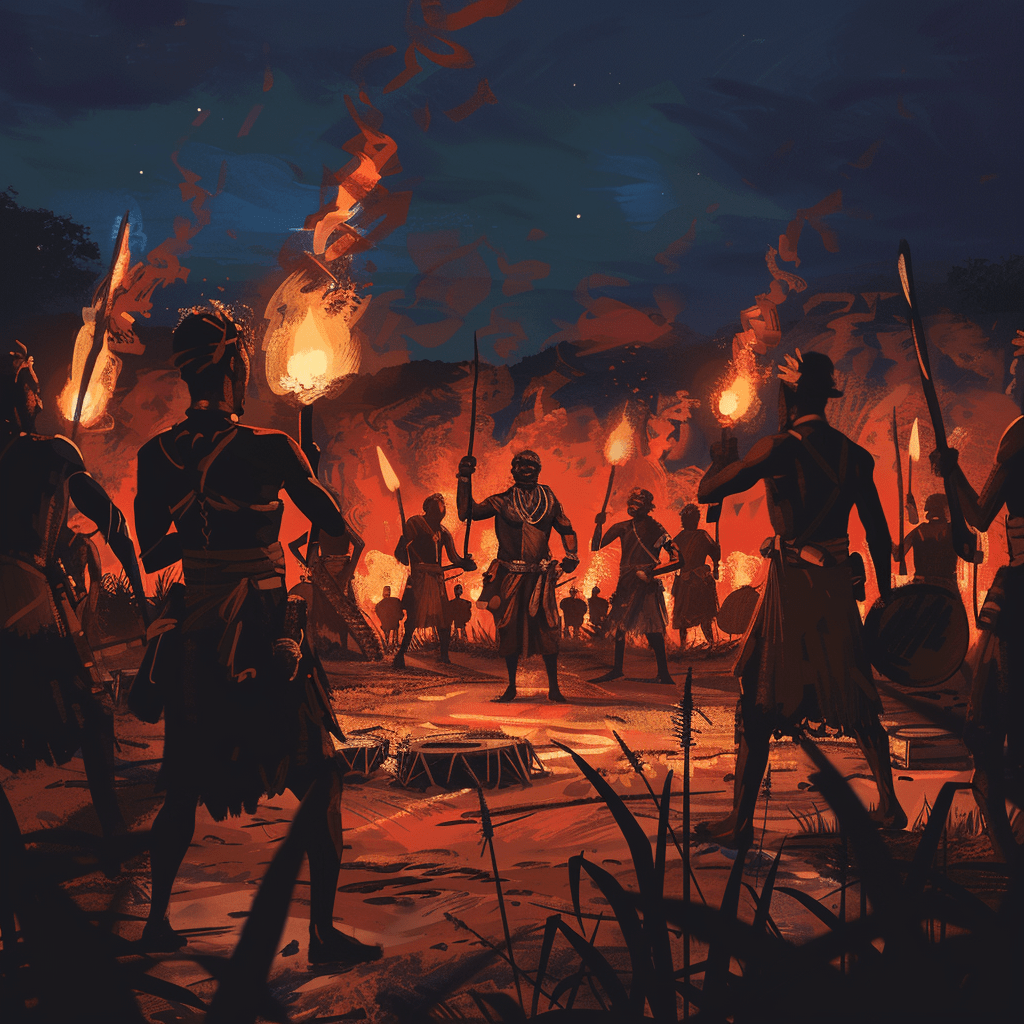
The elder raised his staff high, its tip glowing with a faint blue flame. “Tonight,” he declared, “the river will drink from strange blood and the curse of silence will end.”
John caught my eye — a look I will never forget. Half defiance, half surrender.
And as the drumbeats deepened, as the villagers began their circular dance around us, I felt the river’s wind rise from behind the huts, a low, mournful breath that smelled of rain and death.
That was the moment I knew: we were not guests on this land.
We were its offering.

 Hellotherapy