
I. The Blade and the Night
They always said I wasn’t like the other girls.
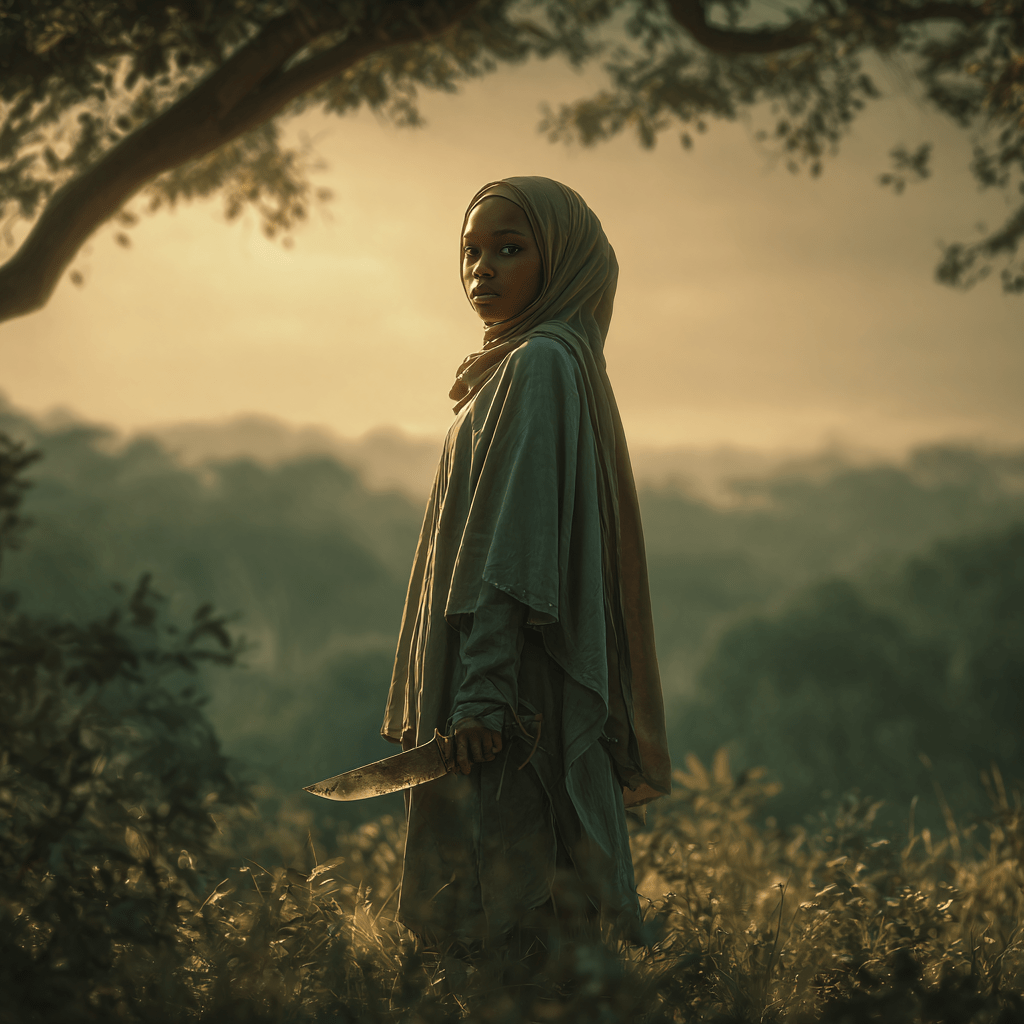
Too restless. Too loud. Too wild. Baba said I laughed like thunder, Mama said I walked like I had a fight to pick with the world. Maybe they were right. That morning, before everything shattered, I slipped a small dagger inside the folds of my jilbab — a narrow, curved blade I’d taken from Mama’s kitchen. I wasn’t planning to hurt anyone. Only to scare Aisha and her friends, the ones who mocked me every day for being “boyish.” They’d pull my scarf, call me yar maza — “half-boy.” I thought I’d flash the dagger, make them stop. I had no idea that before sunset, fear itself would learn my name.
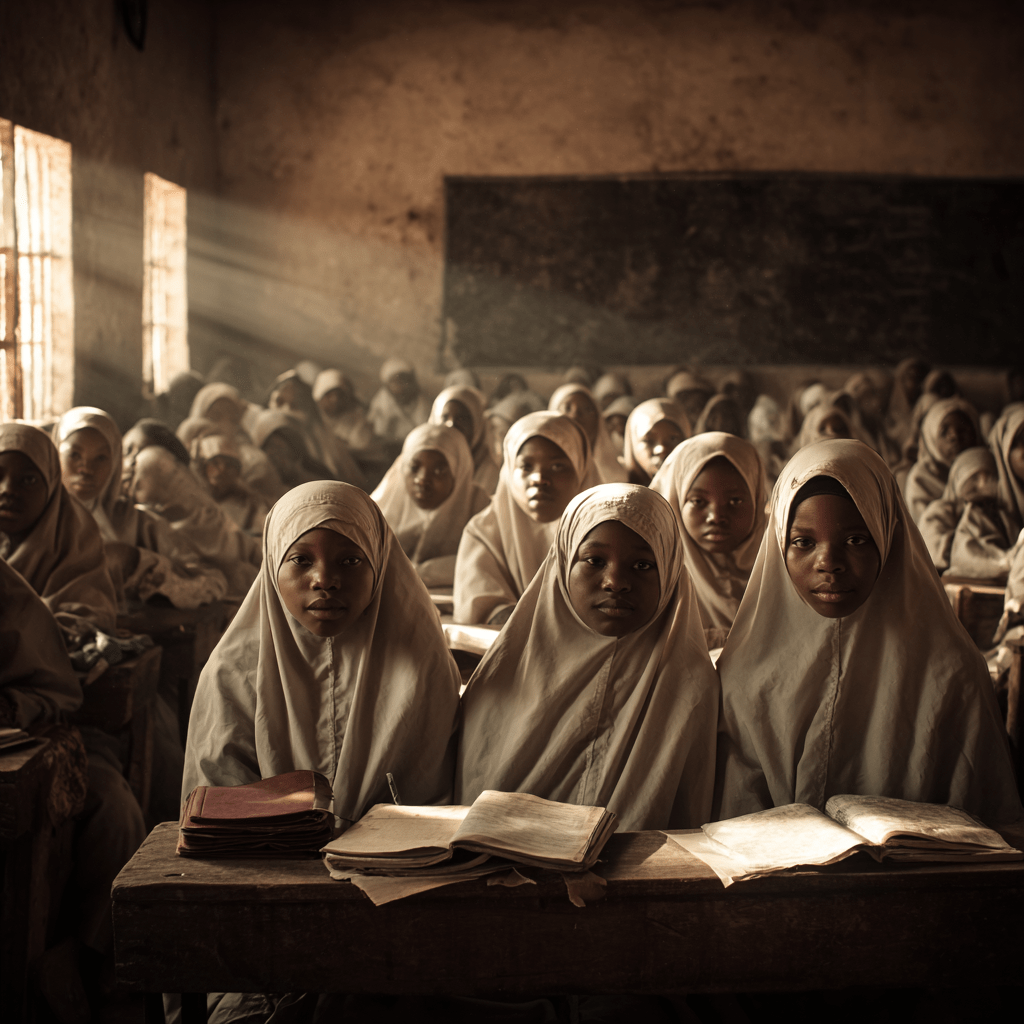
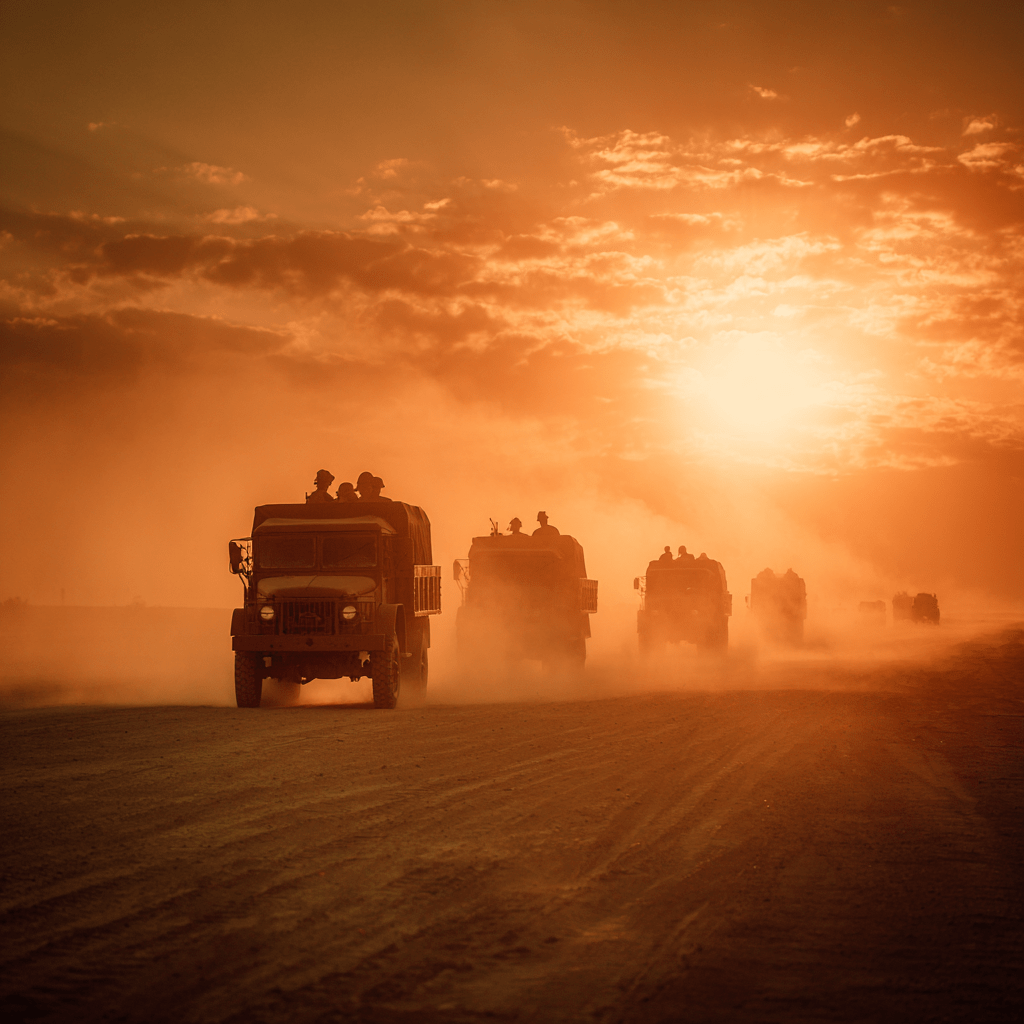
It was a hot afternoon in Chibok, and the air carried dust and chatter — the kind of stillness that comes before something terrible. We were in class, preparing for exams, when the sound came. At first it was distant — like thunder rolling across the hills. Then closer. Trucks. Many of them. The ground trembled, and our teacher, Mrs. Luka, froze mid-sentence. The noise grew louder until the walls began to shake.
Then came the shouting.
“Lie down!” “Move!” “All of you outside!”
Men with guns. Faces wrapped in black cloth. Voices rough like stones. Some laughed as they fired into the air, others barked orders in Hausa and Arabic. We screamed, but the screams were swallowed by the sound of engines and gunfire. I saw my best friend, Rahila, fall. Not from a bullet — from terror. Her legs simply refused her.
They dragged us by our arms, threw us into the backs of trucks like sacks of grain. I still remember the smell — diesel, sweat, blood, the sharp tang of fear. My dagger pressed cold against my ribs under the jilbab, and I kept my hand over it the entire ride. I didn’t even know why. Maybe I thought it would keep me safe. Maybe it already knew what I would have to do.
The journey felt endless. We crossed villages, fields, roads where no one came out to help. Sometimes I saw faces peering from windows, watching us go, quickly closing their doors. Everyone was afraid. Everyone wanted to survive.
When we reached their camp, the night had already eaten the sky. They kept us in a clearing surrounded by trees and firelight. The men sang war songs, their laughter loud and sharp like machetes. We were told to kneel. Anyone who cried too loud was struck. Anyone who prayed was mocked.
Days turned into weeks, or maybe it was just one long night that never ended. They gave us little food, sometimes just dirty water and a handful of rice. They made us watch them train, chant, pray, kill goats — and once, a man. They said it was for “God.” But the God I knew didn’t sound like that.
Then there was Bako.
He was tall — taller than any man I’d ever seen. His voice was deep, a growl that made even the other fighters fall silent. They said he was the third in command, that he’d once killed a soldier with his bare hands. I believed them. He carried cruelty like it was part of his skin. He liked to walk among us, staring too long, asking for names, smiling the way a lion might before it pounces.
When his eyes landed on me, I stopped breathing. The other girls whispered that he’d taken two before.. they never came back. Every night I prayed that he’d forget my face. But the night came when prayer wasn’t enough.
He entered the hut when the guards were half asleep. The fire outside flickered through the holes in the wall, drawing his shadow long and monstrous. He knelt beside me, his hand brushing the fabric of my jilbab, his breath thick with tobacco and blood.
“Don’t fight,” he said.
But I had been fighting all my life.. fighting against people who mocked, teachers who scolded, and a world that told me I was too much. He didn’t know that. He didn’t know about the blade pressed between my ribs, the one that had slept against my skin since that day.
When he leaned closer, I moved. My hand found the dagger as if it had been waiting. I didn’t think. I just felt the heat of his neck, the softness beneath it, the way the skin gave way like paper.
He made a sound — half growl, half gasp — and then the world exploded. Blood sprayed warm across my face. His body collapsed beside me, heavy and final. For a moment, I just stared, unable to move. The other girls began to scream.
Then the camp erupted.
Men shouted, gunfire crackled. Someone found the body. I ran barefooted11, blind, my heart slamming against my ribs. Branches tore my clothes, thorns dug into my feet, but I didn’t stop. The forest closed around me like a mouth. I ran until I couldn’t hear them anymore.
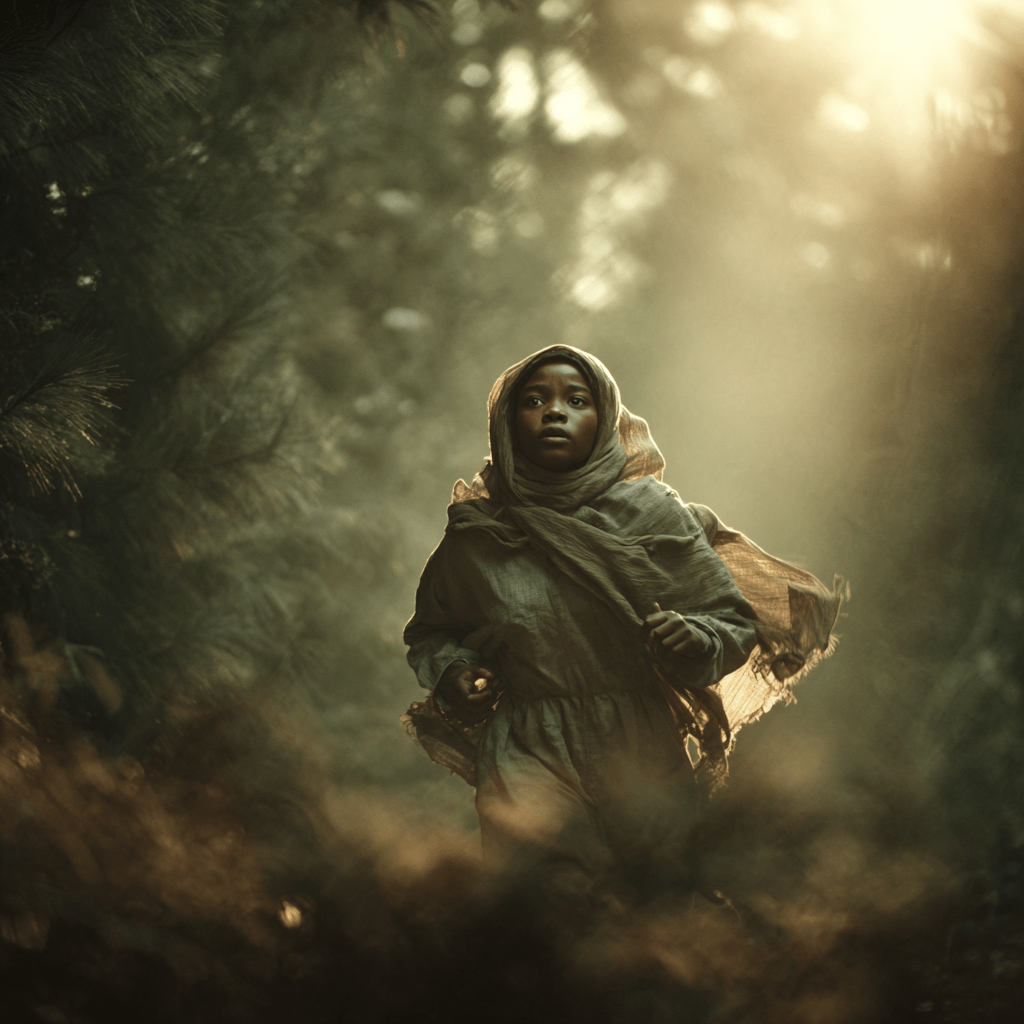
When dawn came, I was still running. My legs shook, my throat burned, but the sky was pink and wide, and for the first time in forever, I could breathe.
I washed my hands in a muddy stream, but the blood stayed under my nails. The dagger, slick and rusted, glinted weakly in the sunlight. I dropped it. It sank slowly, disappearing beneath the water like it was never there.
I thought freedom would feel lighter. It didn’t. It felt like carrying all the dead girls with me.
When night fell again, I lay under the stars, too tired to cry, too alive to sleep. The crickets hummed, the air smelled of dust and wet leaves, and somewhere in the distance, a dog barked.
For the first time, I whispered my own name — Zara. Just to remember it still belonged to me.
And as I stared at the sky, I thought:
If God is still watching, maybe He hasn’t turned away completely.
Maybe He left me the stars, so I would know I’m not forgotten.

 Hellotherapy