
Book One: Blood of the River
Chapter One – The River’s Mouth
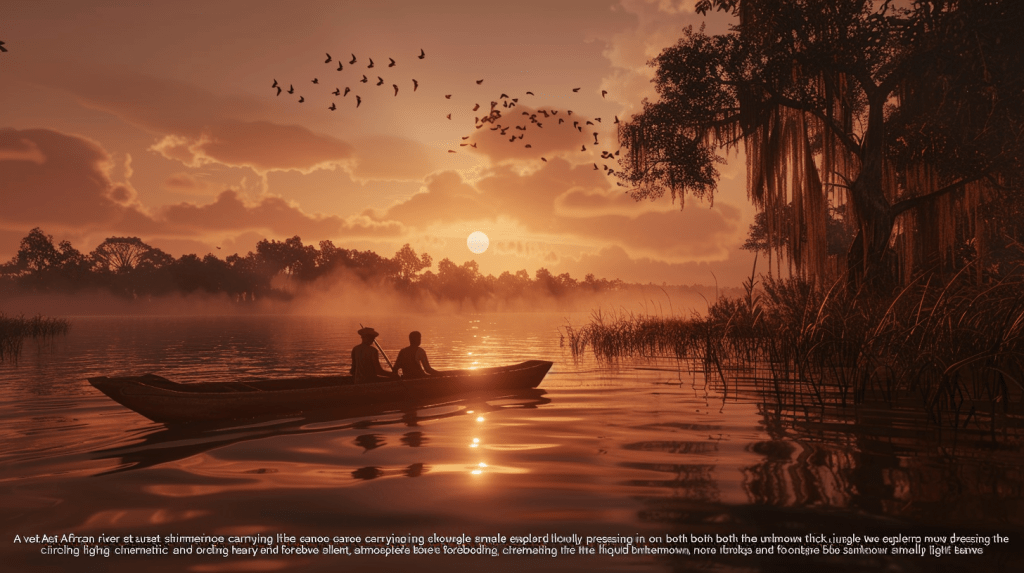
The Niger stretched before us like a coiled serpent, vast and shimmering in the evening sun. I had seen many rivers in my life, but none that seemed to breathe, its surface alive with ripples that whispered as if they carried secrets from the very heart of Africa.
My brother John stood at the bow of our small craft, his eyes fixed on the horizon. Always the dreamer, always the one who believed the world would open to us if only we pressed hard enough. He turned to me then, his smile faint beneath the weight of the humid air.
“Richard,” he said, “we are the first to see this river as it truly is. Do you not feel it? History is unfolding beneath our feet.”
I wanted to share his excitement. Truly, I did. But the silence that rolled from the thick mangroves unsettled me. Birds that had followed us for days had fallen quiet. Even the water seemed to resist the oars, as if warning us back.
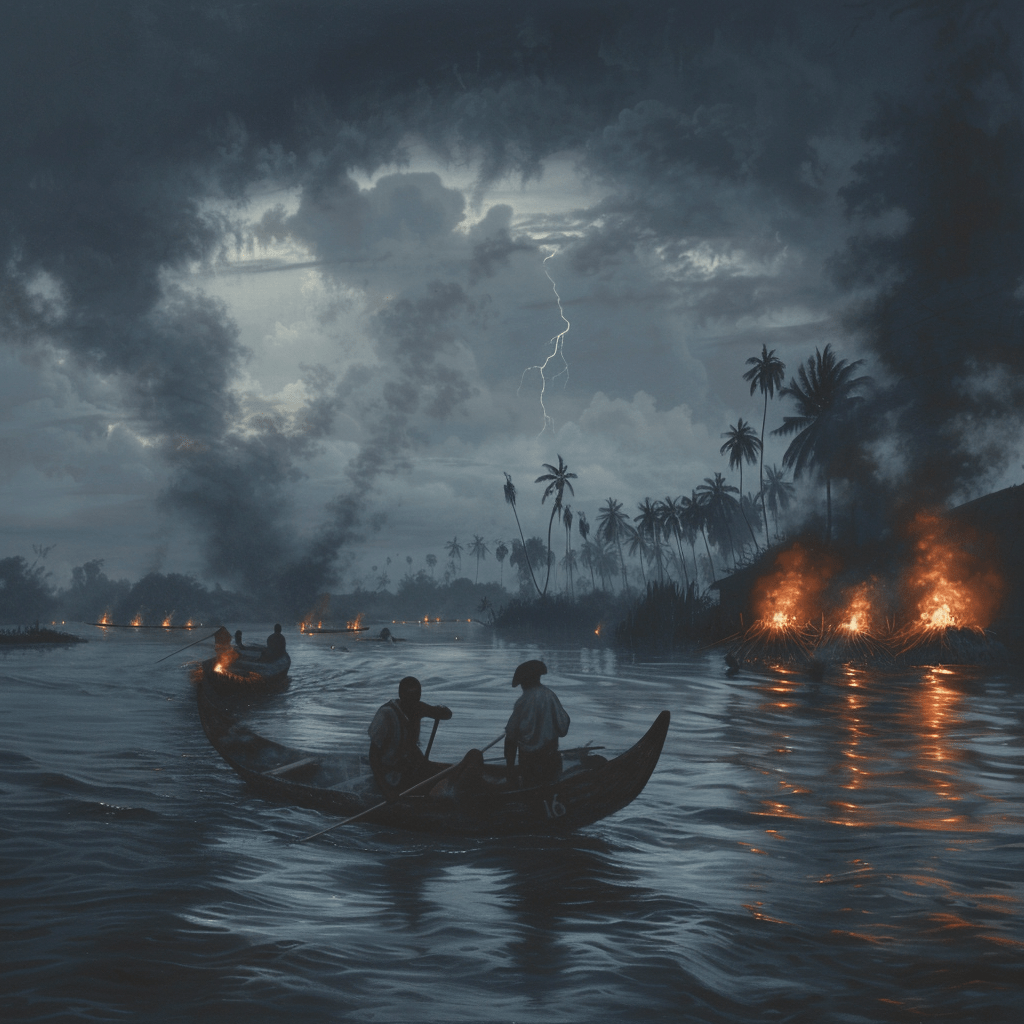
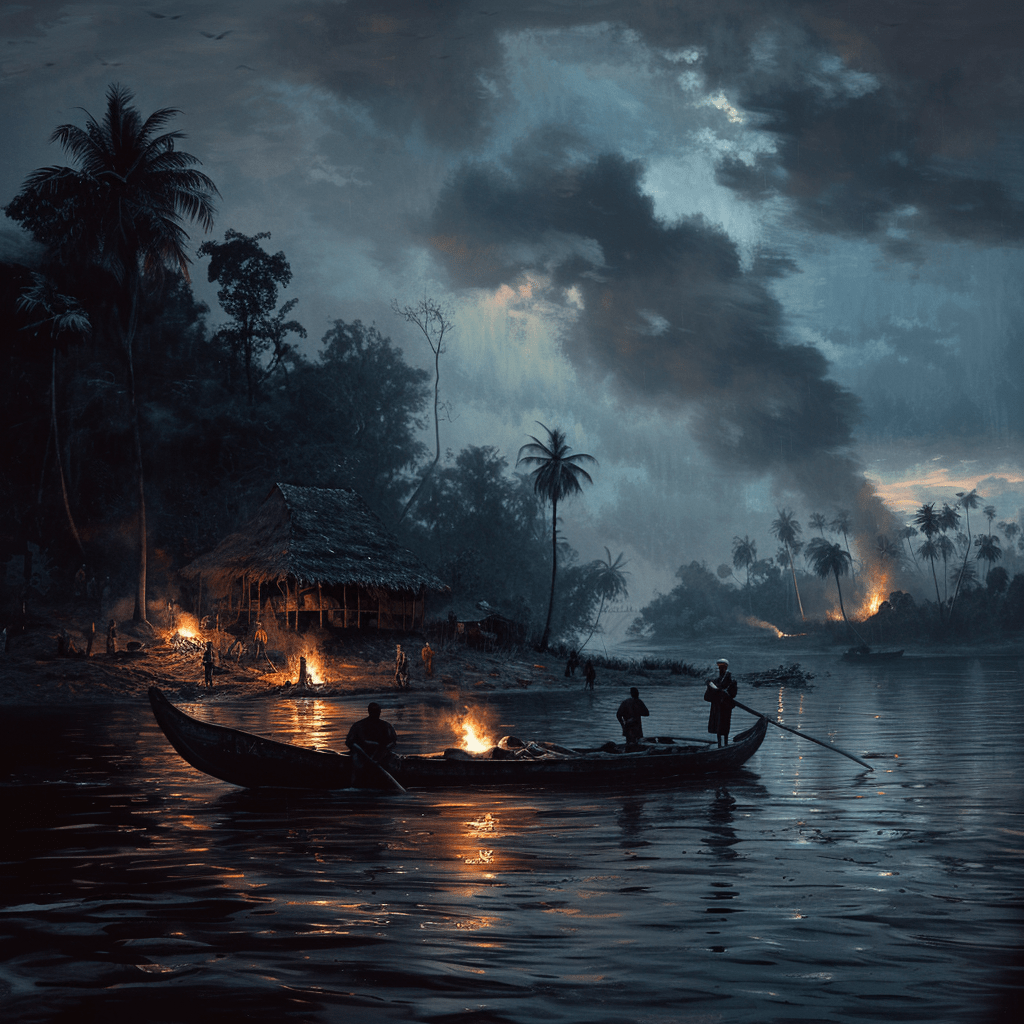
By nightfall, we reached the village of Aboh. Fires burned along the banks, casting long shadows across the huts clustered like watchful eyes. The people were waiting. Not with smiles or songs, but with a heavy, unnerving stillness.
They watched us—hundreds of them—from the shore. Men with spears, women with faces hardened by something older than grief, and children who clutched their mothers’ wrappers in silence.
John raised a hand in greeting. “Friends!” he called, his voice carrying across the water. “We bring gifts—iron, cloth, and beads from across the seas! We seek peace, not trouble.”
But there was no reply. Only the crackle of fire, the rustle of leaves, and the endless gaze of their eyes—fixed not on our goods, but on our faces.
It was then I noticed it. A murmur moving through the crowd, a single word repeated like a rising tide. I did not yet understand their tongue, but I caught its weight. “Ọcha… ọcha… ọcha…”
White.
Not white as in stranger. White as in marked.
I felt the weight of their stares like a shroud. My skin, pale from birth, now condemned me. A shiver traced my spine as the realization grew: they were not seeing us as men, nor as explorers.
They were seeing us as offerings.
John, ever blind to danger, leaned closer. “They revere us,” he whispered. “Richard, do you see? They take us for something more than men.”
But in the silence of the shore, I felt it—that terrible stillness that comes before a storm. And deep inside, a voice I could not name whispered back:
Not reverence, brother. Hunger.

 Hellotherapy