
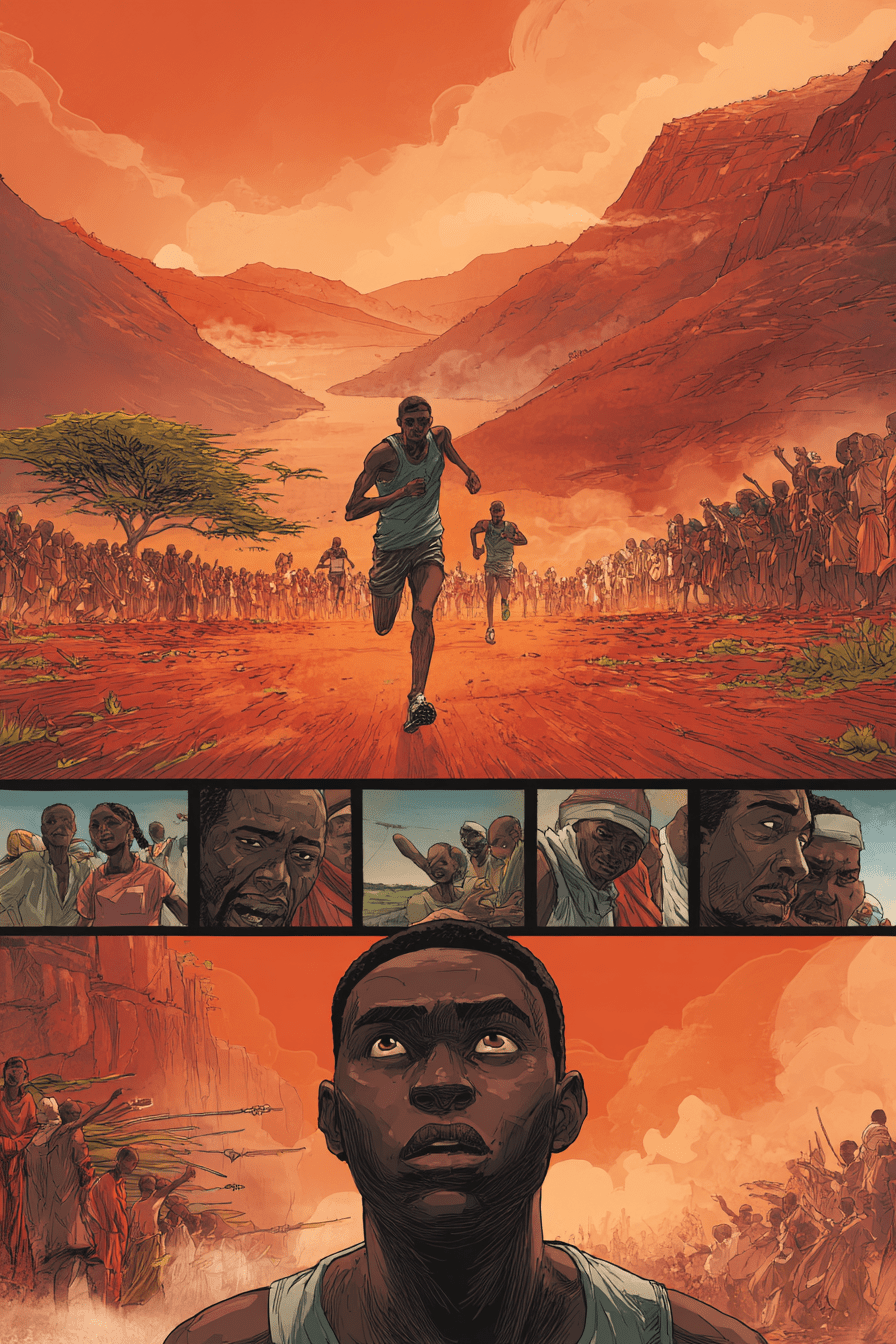
Part I – The Beginning
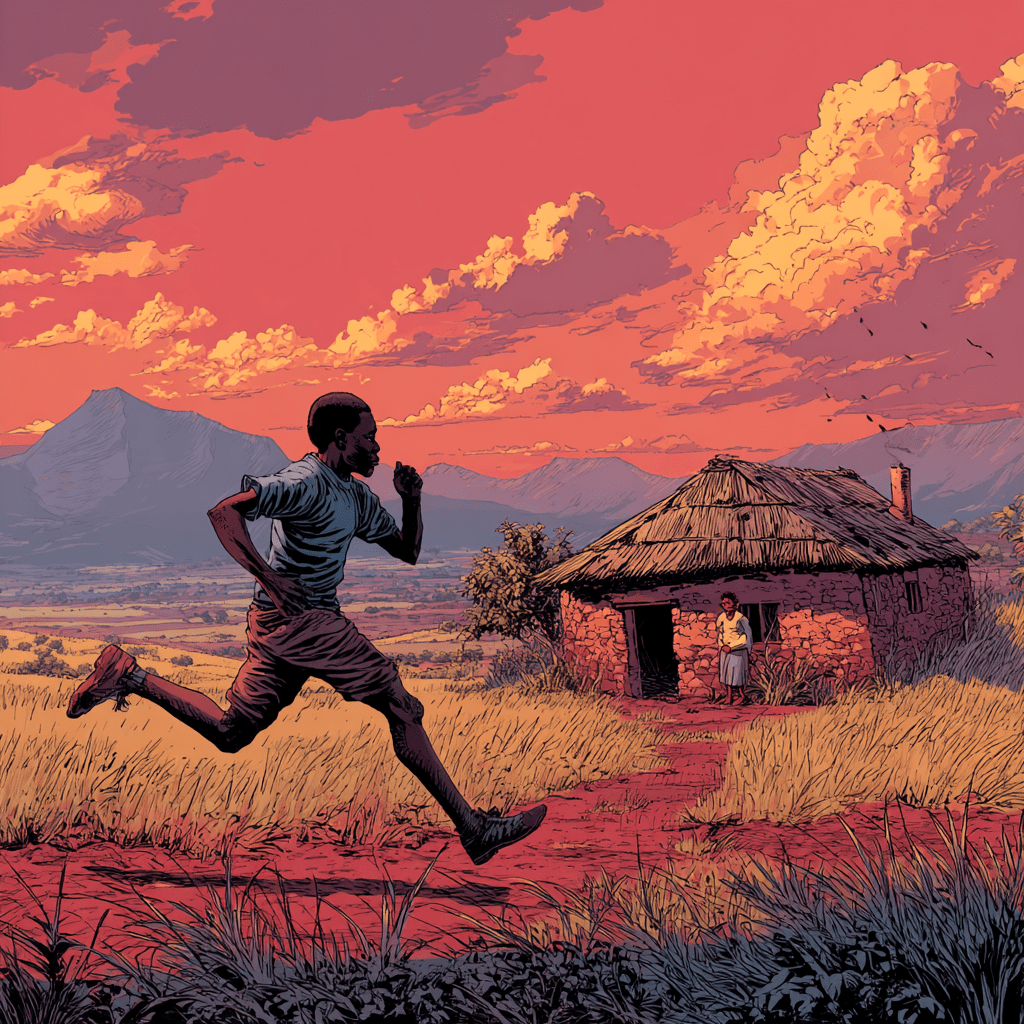
In the red-soiled highlands of Kenya, 19-year-old Kiprono had one dream: to become the world’s fastest marathon runner. Every dawn, he trained barefoot across the valleys, the morning dew kissing his legs as he chased the horizon. But life wasn’t as kind as his dreams. At 19, he was already burdened by reality—his 16-year-old sweetheart, Achieng, was pregnant.
They loved each other fiercely, but love could not fill empty stomachs. Her father had disowned her, her mother wept daily, and Kiprono felt the crushing weight of responsibility. He wanted to give his child a better life, but Kenya offered him nothing except poverty and despair.
Then came the whisper of a dangerous hope—Italy. The land where marathon runners became legends. He knew no plane ticket awaited him, so he decided to take the long, perilous route across Africa.
Part II – The Desert of Death
Kiprono’s journey began with smugglers in Sudan, their promises dripping like poisoned honey. Alongside dozens of desperate men and women, he trekked across the Sahara. The desert sun was a merciless beast, and the nights froze the marrow in his bones.
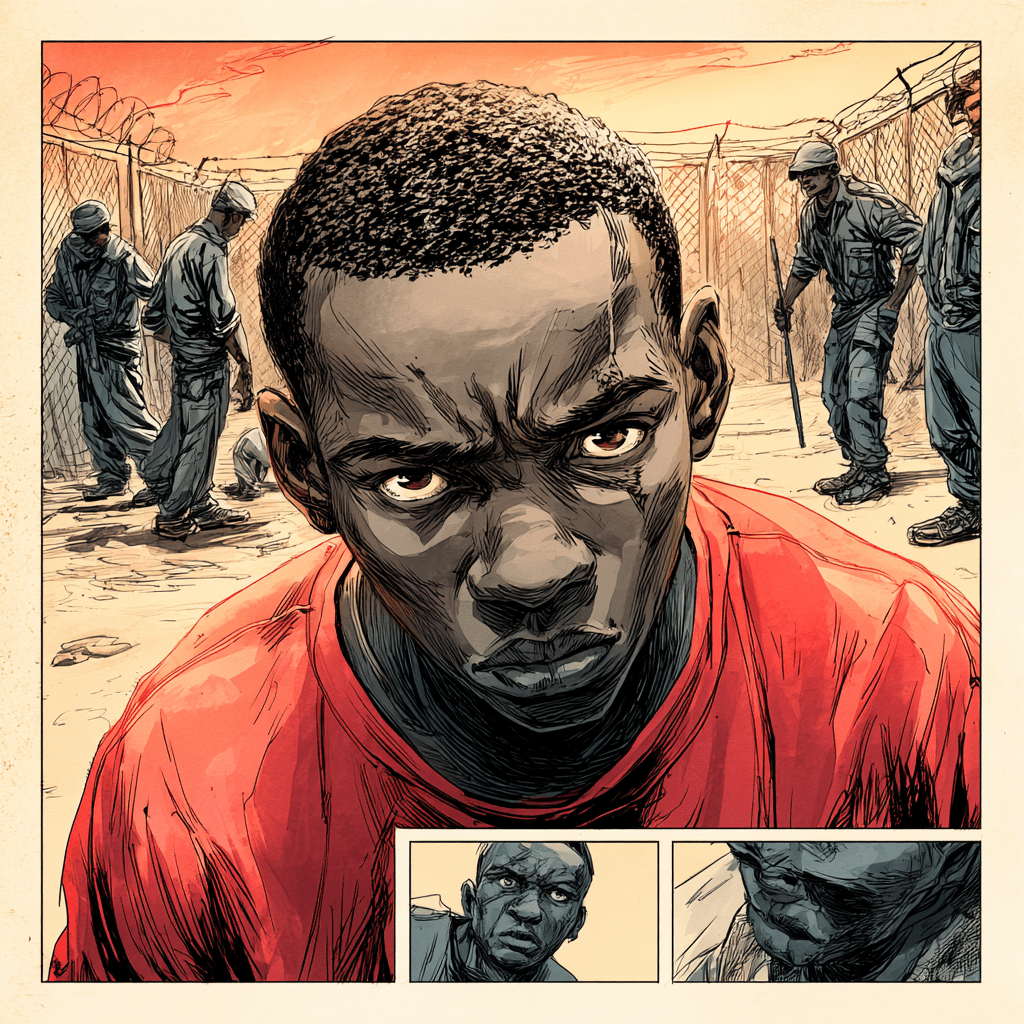
In Libya, his nightmare deepened. Armed men dragged him into a detention camp, where the smell of sweat, blood, and hopelessness suffocated the air. One night, during a beating, he barely survived—an AK-47 muzzle pressed to his forehead. In that moment, he thought of Achieng and the unborn child. Somehow, luck—or fate—spared him, and he escaped with others under cover of darkness.
Part III – The Sea of Graves
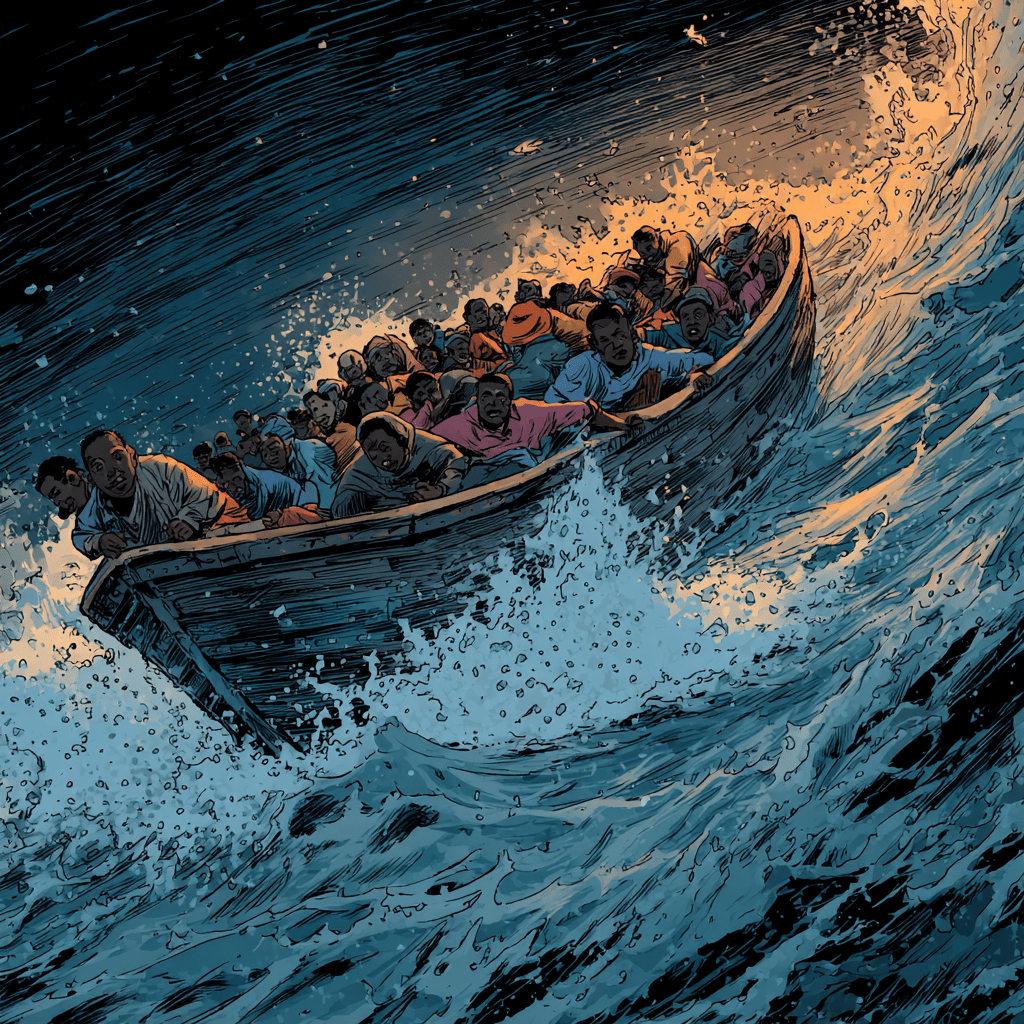
At the Libyan coast, he boarded a rickety, overcrowded boat bound for Italy. The sea stretched endless and dark, a monster waiting to devour them. On the third night, a storm tore through their fragile vessel. Waves higher than trees slammed against the boat, and people screamed as water swallowed them whole.
Kiprono clung to the side, choking on salt water. The cries of mothers and children pierced the night, then silence—an awful silence. When the sun rose, fewer than half remained alive, and he was one of them. Rescued by a patrol boat, he thought salvation had come. But salvation came with shackles; he was thrown into a migrant camp in Sicily, awaiting deportation.
Part IV – A Face From the Past
Hope abandoned him there, until one day, an African-Italian officer walked into the camp—tall, broad-shouldered, with familiar eyes.

“Kiprono?” the man whispered.
It was Davide, his childhood best friend from primary school, whose family had migrated years earlier. They had once chased goats together in the Kenyan hills, laughing until their ribs hurt. Now Davide wore the uniform of the Italian authorities.
Tears burned Kiprono’s eyes. “Usiwache wanirudishe nyuma, tafadhali.” He pleaded (Don’t let them send me back, Please).
Davide did everything in his power—legal paperwork, appeals, pulling strings no one else could. Against all odds, Kiprono’s deportation order was lifted. He was granted asylum, and later, citizenship.
Part V – The Long-Awaited Victory
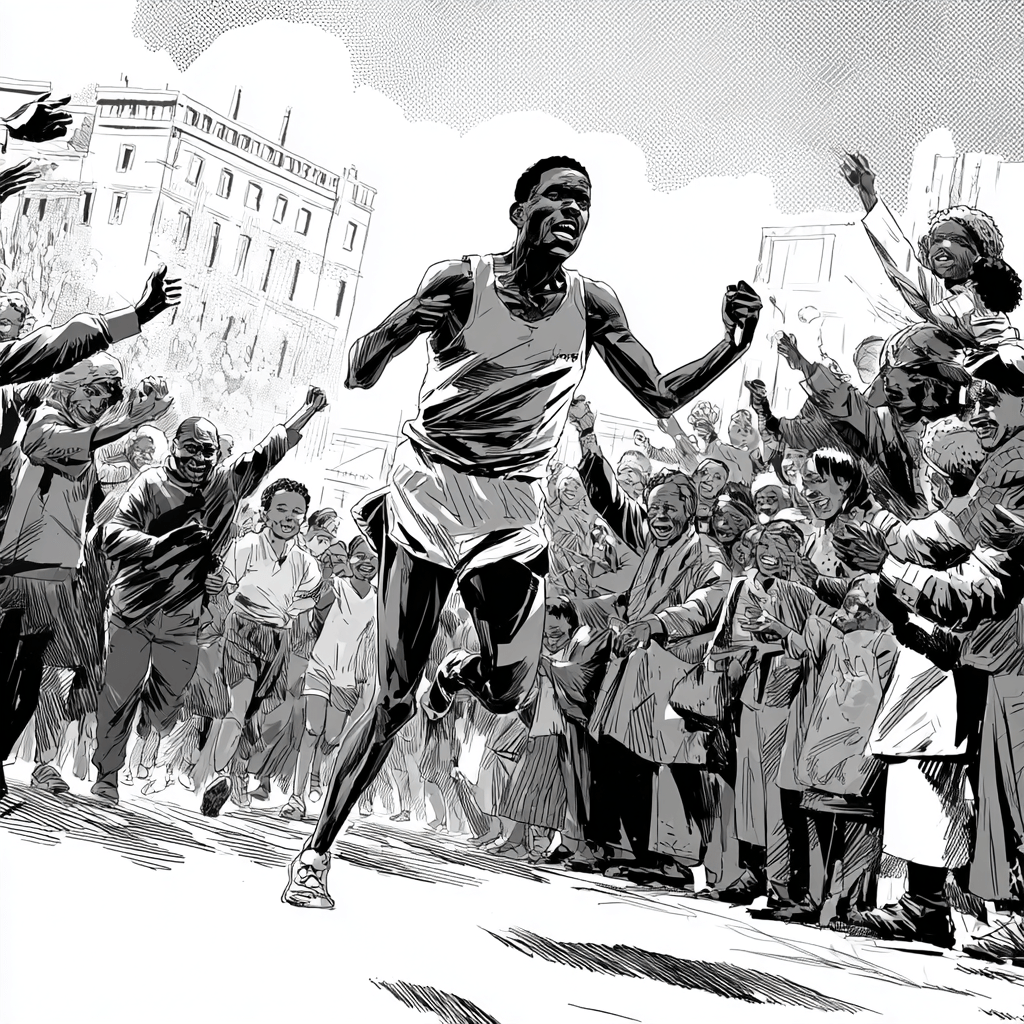
A year passed. Kiprono trained harder than ever before, this time with shoes on his feet, proper nutrition, and the fire of survival in his heart. He rose through the ranks, from local competitions to national trials, his story whispered as legend among his peers.
Then came the Olympics. Wearing the blue vest of Italy, the boy from Kenya sprinted across the final stretch of the marathon. The stadium thundered with cheers as he crossed the finish line first, a gold medal shining in the morning sun. Italy had its champion—but the world knew he carried the spirit of two nations in his stride.
Part VI – Full Circle
At the medal ceremony, as the anthem played, Kiprono scanned the crowd. And there she was—Achieng, now a young mother, with their little boy perched on her shoulders. Davide had arranged everything to reunite them.
Kiprono broke protocol, leaping into the stands, hugging them both as tears streamed down his face. Reporters captured the moment—the marathon runner who outran death, the sea, and despair, to win love, life, and legacy.

With teary eyes he whispered to Achieng “Nilikuambia nitafanikiwa. Nilikuambia mtoto wetu hatawahi kufa njaa” (I told you I’d make it. I told you our son would never know hunger).
And in that golden moment, the long route had been worth every step.
Author’s Note
Although this is a fictional story, it was created to shed light on the real struggles faced by many immigrants from Africa who risk everything in search of a better life for themselves and their families. The journey across deserts, seas, and borders is often marked by danger, loss, and uncertainty, yet it is fueled by hope, resilience, and love. This story is a tribute to their courage and a reminder of the human spirit that drives people to endure hardships in pursuit of dignity and a brighter future.

 Hellotherapy