
Long ago, when the stars still whispered to the earth and gods walked freely among mortals, there was a goddess named Calypso. She was radiant, adorned in flowing silks of night-blue, and her voice could summon rains, heal wounds, or stir the hearts of men. Unlike the other deities of her pantheon—proud and distant—Calypso’s heart beat tenderly for mortals. She lingered among them, listening to their prayers not as commands but as cries of kindred souls.
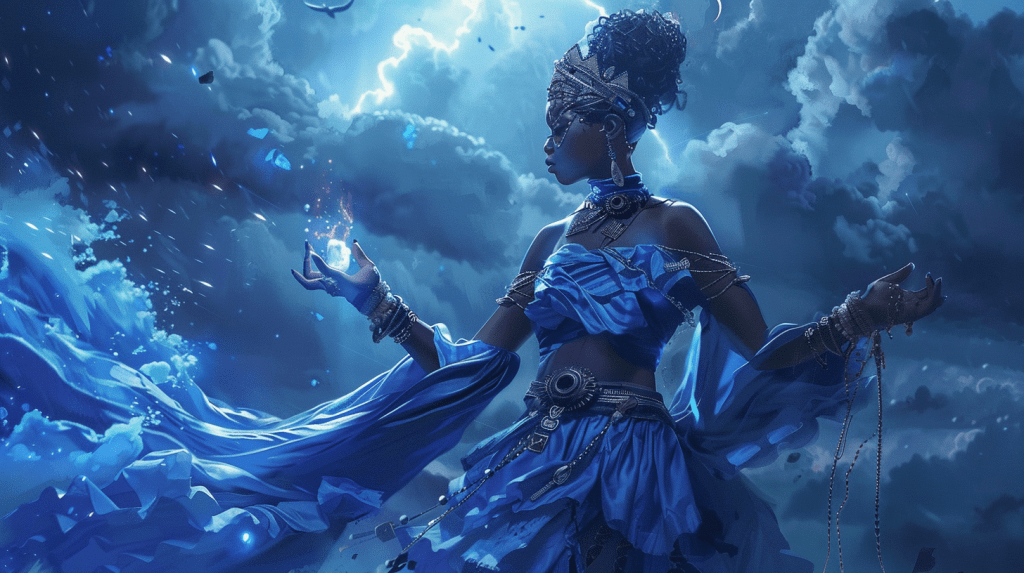
Among her many followers, none was more devoted than a servant girl named Iyase. Iyase had nothing—no family, no dowry, no future—but she prayed to Calypso with the fervor of a thousand temples. She sang to her in secret, offered food she barely had, and never wavered even when her village mocked her for worshipping a goddess “too soft to be great.”
The Forbidden Gift
One day, Iyase faced death at the hands of raiders. Desperate to save her, Calypso defied the council of gods and descended from the heavens, placing upon Iyase’s neck her sacred amulet, a moonstone necklace pulsing with divine charm. With it, Iyase became irresistible to any man who laid eyes on her. The raiders fell at her feet in devotion. Villages bent their knees. Kings warred to win her hand.
But what began as protection grew into hunger. Iyase learned to bend men to her will, weaving armies from suitors, shaping kingdoms with whispered commands. She crowned herself Queen of Desire, ruling from a throne built not by love, but by obsession.
The council of deities raged at Calypso’s defiance. They stripped her of her godhood and casting her down into the mortal realm. Alone and weakened, Calypso wandered the lands as storms gathered overhead, for her fall had broken the balance.
The Betrayal
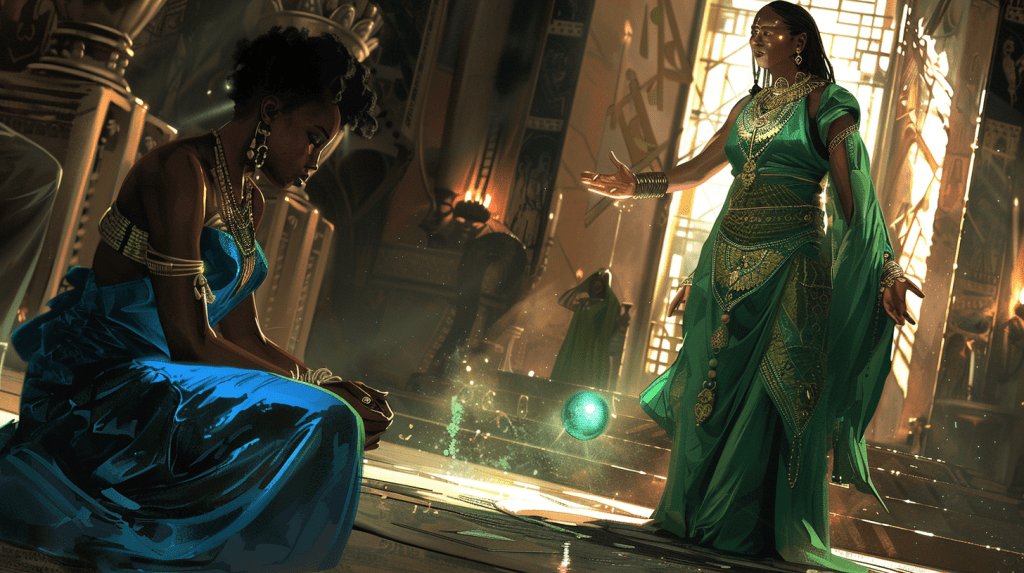
At last, Calypso sought Iyase. She entered the queen’s hall, veiled and weary, begging for the return of her amulet. But Iyase’s eyes, once filled with devotion, now burned with arrogance.
“Why should I return it?” Iyase sneered. “I am worshipped now. I am adored. Your gift has made me more powerful than you ever were.”
Then, with a flick of her hand, she summoned her throngs of bewitched suitors. Dozens of men drew blades, eyes glazed with unnatural love. Calypso, powerless and betrayed, fled into the night as the men of kingdoms pursued her.
The Mortal’s Vow
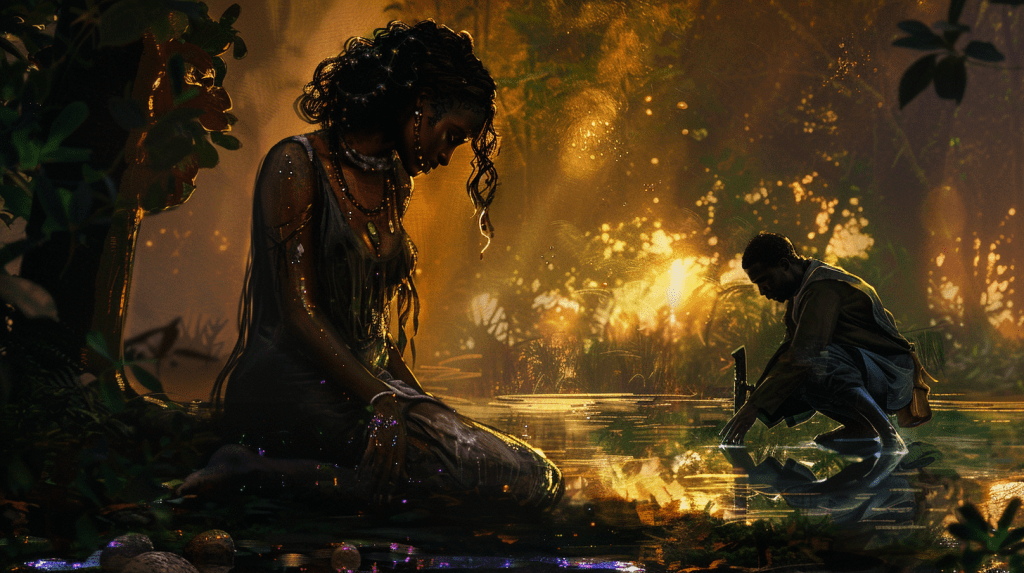
Exhausted and broken, Calypso collapsed by a riverbank. It was there she met Oma, a humble hunter who was drinking from the river Calypso, one named after the deity he revered. He saw her not as goddess or queen but as a woman trembling with fear. Unlike all others, he did not fall under Nyasha’s charm. He listened. He cared. He pledged his life to her.
Touched by his purity, Calypso used the very last ember of her divine power to weave a blessing upon him: Iyase’s allure would never bind his heart nor cloud his mind. His his name meant beauty, a reflection of his heart
With courage alone, Oma marched into Iyase’s court. Where others groveled, he resisted. Where others worshipped, he defied. He outwitted Iyase’s ensnared suitors, slipping past guards entranced by her beauty, until at last he seized the amulet from her neck.
The Restoration

The moment the amulet left Iyase’s neck, her power crumbled. The suitors awoke from their spell, horrified at their blind servitude. Iyase was dethroned, left powerless as the kingdom dissolved around her.
Oma returned the amulet to Calypso, laying it gently in her palms. Her divinity rekindled in a surge of silver light, restoring her strength and radiance. But when the deities called her back to the council, she refused.
Instead, she turned to Oma. “You have given me more than any god or mortal ever has. You gave me loyalty without chains, love without enchantment, and devotion without fear. For that, you are my equal.”
She crowned him her consort and together they built a new civilization. A civilization not of domination or blind worship, but of balance. Their city rose with temples, gardens, and schools, where knowledge and justice reigned alongside reverence for the divine.
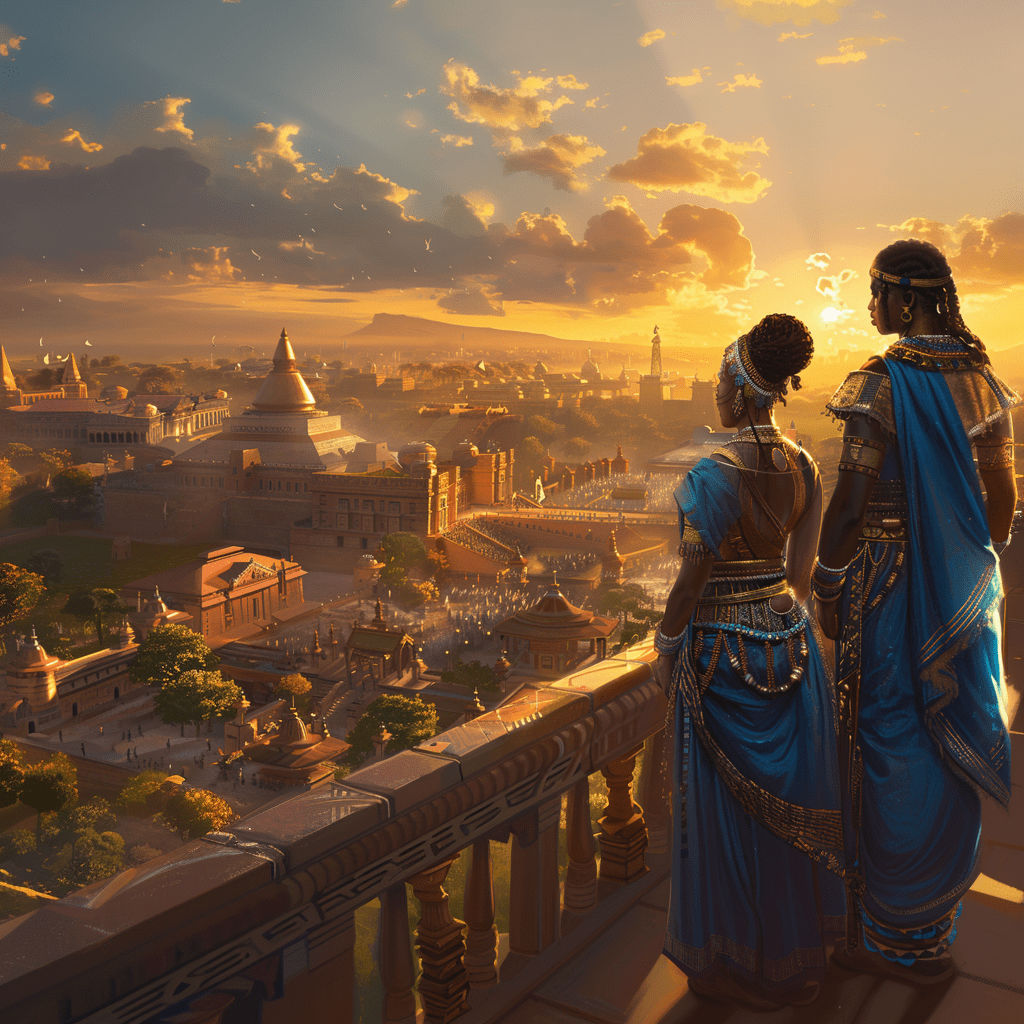
And so the tale of Calypso became not one of fall or betrayal, but of redemption through mortal love. To this day, her people say that the greatest power a deity can wield is not dominion, but devotion freely given.

 Hellotherapy