

A Soldier’s Return
The sun always felt hotter in Owo than it ever did in Afghanistan. Adebayo Oladipo used to joke that if the Taliban had to fight under the Owo sun, they’d drop their rifles and surrender.
When he returned home after years in service, his skin was tougher, his eyes sharper, but his heart—his heart only wanted peace.
He married Adetutu, a woman whose laughter danced like the bells in Owo market on a festival day. His aged mother, Mama Oladipo, whose hair was now the color of dry cotton, blessed their union with prayers poured out like palm oil on yam. Their little daughter, Boluwatife, loved to play hide-and-seek between the yam barns and always carried a ragged doll that never left her side.
The days passed sweetly. At dawn, he would wake to the smell of akara frying in palm oil. At dusk, he would watch the fireflies flicker above his cornfields. For the first time in years, Adebayo believed God had allowed him a second life.
The Sunday of Blood
That Sunday morning, Adetutu dressed carefully. She tied her iro and buba in soft sky blue, humming a hymn as she wrapped gele around her head. She placed Bolu in a little white dress with yellow ribbons, while Mama Oladipo wore her old lace blouse, the one she said made her feel young again.
“Come to church with us, Bayo,” Adetutu teased, brushing his cheek.
He shook his head, holding his spade. “The corn won’t wait, my love. But I’ll hear the choir from the farm. Sing loud, ehn?”
They laughed, kissed, and parted ways.
Minutes later, the peaceful hum of insects in his field was shattered. Ta-ta-ta-ta-ta! The unmistakable crack of AK-47s split the air. His soldier’s body reacted before his mind could catch up. He tightened his grip on the spade and sprinted.

Dust rose behind him. His heart pounded harder than any mortar fire he had faced abroad. And then—he saw it. Smoke rising from the church, broken hymns turned into screams, blood staining the holy ground.
There, among the chaos, lay his world: Adetutu clutching her stomach, Mama Oladipo slumped against a pew, little Bolu’s yellow ribbons now red.
The spade dropped from his trembling hand. For the first time since the battlefield, Adebayo fell to his knees. His cry carried through Owo like thunder.
The Vow
He dug their graves himself. No one dared stop him. He refused shovels, refused help.
The spade cut into the earth with brutal rhythm. Sweat mixed with tears until his eyes were blurred with salt. When the last mound was sealed, he knelt before it and pressed his forehead into the soil.
“I swore an oath once… to defend the helpless. I failed them in church. But I will not fail them in death.”
He lifted the spade, its blade still wet with the earth that covered his family, and whispered:
“With this… I will answer.”
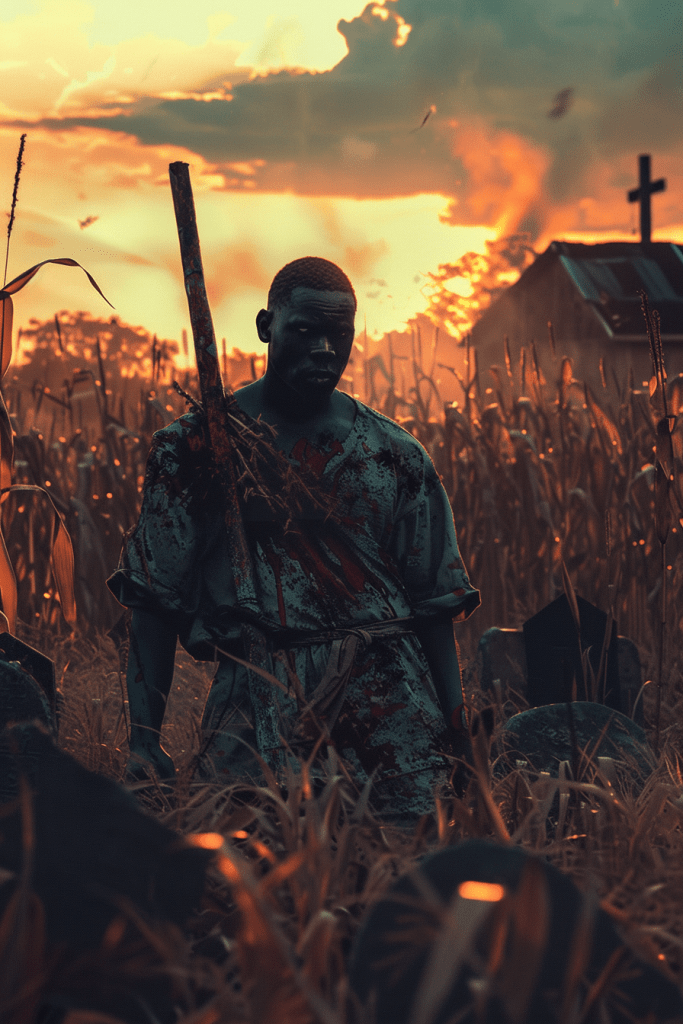
The Hunt
The twelve gunmen thought themselves untouchable. They had rifles, motorcycles, and the cover of forests. But they had never faced a man who had fought in Helmand Province with only a knife and lived to tell it.
The First Kill:
Adebayo tracked him by footprints in soft mud. When the man bent to drink from a stream, the spade cracked his skull. He buried him beneath the same bank, the bubbling water swallowing his blood.
The Second:
Caught sleeping in a bamboo hut. Adebayo drove the spade through the wooden wall, straight into his chest. The man gasped once, and then silence.
Three Together:
Around a campfire, laughing over stolen loot. He waited until the moon hid behind clouds, then struck like a shadow. Three shallow graves were left behind the campfire ashes.
Each time, he whispered their names as he buried them, as if giving an offering to the souls of his wife, his mother, and his child.
The Legend of Owo
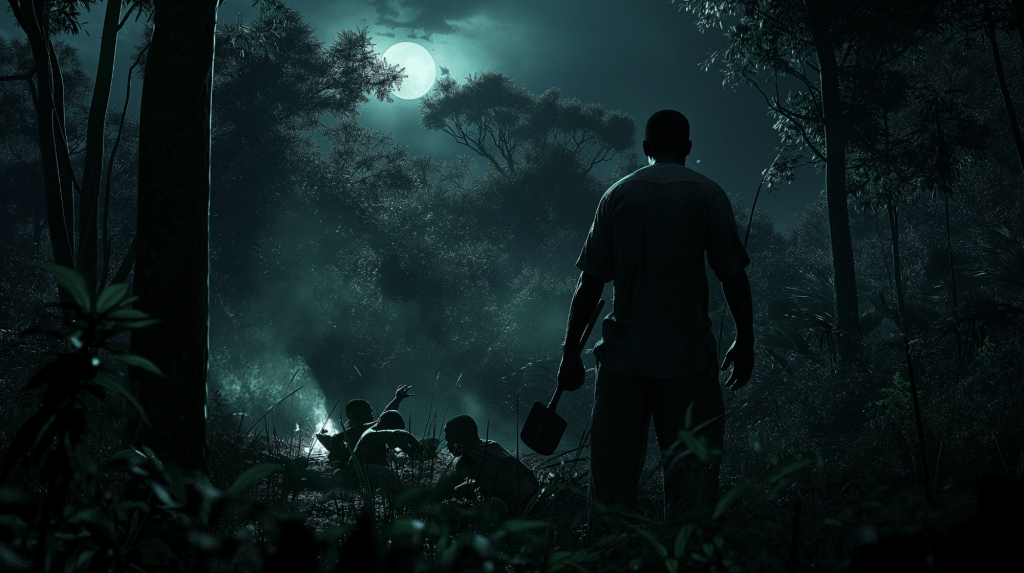
The Spade’s Justice
By the eighth man, fear spread like wildfire among the killers. They stopped laughing at night. They stopped sleeping deeply.
They began to whisper, “Ẹni tí ń pa wa… the Spade Revenger.”
The last four were the hardest. One begged, swearing he hadn’t pulled the trigger. Adebayo’s face was stone. “The blood on your hands doesn’t care who fired first.” The spade came down, cold and final.
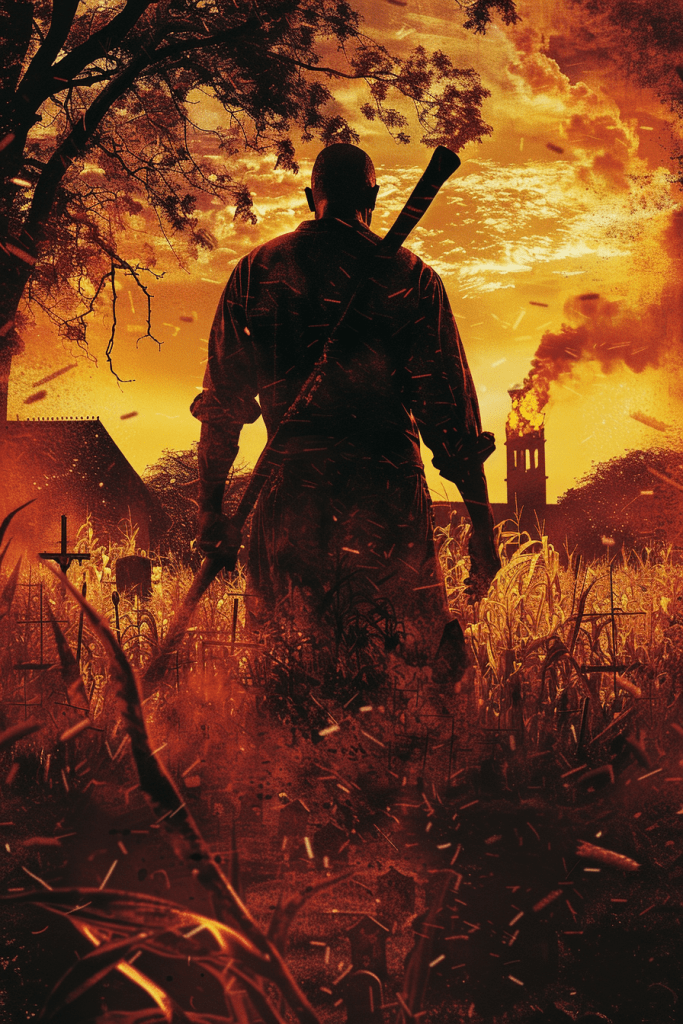
The Spade Revenger
When the twelfth man was buried, Owo knew peace again, though not the kind it had before. Farmers still spoke of seeing Adebayo at night, sitting by the graves of his family with the spade across his lap, sharpening it slowly on a stone.
Children whispered the tale of a man who turned farming into vengeance. Women crossing the forest prayed aloud, “May the Spade Revenger walk with us.”
And deep inside himself, Adebayo knew:
He had once been a soldier of America.
Now, he was the executioner of Owo.
The spade was no longer a tool of soil, but of justice.
And justice had a name—The Spade Revenger.

 Hellotherapy